

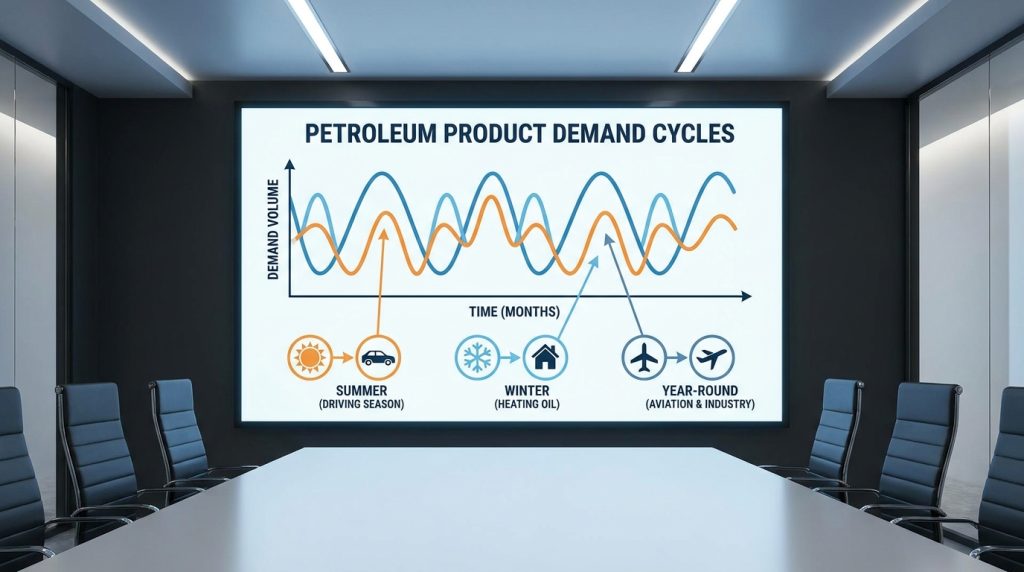
Petroleum product demand cycles refer to the recurring patterns of increase and decrease in the consumption of oil-based products over time. These cycles are influenced by economic activity, seasonal changes, industrial output, transportation needs, and broader global market conditions. Understanding these cycles is essential for governments, energy companies, and traders because they directly affect pricing, production planning, and supply chain decisions.
At the core of petroleum demand cycles is economic growth. When economies expand, industries operate at higher capacity, transportation increases, and consumer spending rises. This leads to greater demand for products such as gasoline, diesel, jet fuel, and petrochemical feedstocks. Conversely, during economic slowdowns or recessions, industrial activity decreases and transportation usage declines, reducing overall petroleum consumption.
Seasonality is another major factor influencing demand patterns. In many regions, gasoline demand rises during the summer months due to increased travel and tourism. This is especially visible in countries with strong road transport systems. In contrast, winter months often increase demand for heating fuels such as heating oil and kerosene in colder climates. These predictable seasonal variations help refiners adjust production schedules throughout the year.
The International Energy Agency (IEA) plays an important role in analyzing and forecasting these demand cycles. By tracking global consumption trends, the agency provides insights into short-term fluctuations and long-term structural changes in petroleum use. Its data helps policymakers and energy companies make informed decisions about supply and investment planning.
Transportation is one of the largest drivers of petroleum demand cycles. The aviation sector, in particular, has a strong impact on jet fuel consumption, which is highly sensitive to economic conditions and global travel trends. Similarly, road freight and logistics activities significantly influence diesel demand, which is closely linked to industrial production and trade flows.
Industrial demand is another key component. Petroleum products are widely used as feedstocks in the petrochemical industry, producing plastics, fertilizers, and synthetic materials. When manufacturing activity increases globally, demand for these inputs rises. However, industrial demand can be affected by supply chain disruptions, technological changes, or shifts toward alternative materials.
Geopolitical events and market shocks can also disrupt normal demand cycles. Conflicts, sanctions, or sudden changes in oil supply can lead to price volatility, which in turn affects consumption behavior. High prices often reduce demand temporarily, while lower prices can stimulate increased usage.
In recent years, long-term structural changes have begun to reshape traditional demand cycles. The rise of electric vehicles is gradually reducing gasoline demand in some regions. Energy efficiency improvements in vehicles and industries are also slowing growth in petroleum consumption. At the same time, environmental policies are encouraging shifts toward cleaner energy sources, which may weaken some traditional demand patterns over time.
Despite these changes, petroleum remains essential to the global economy. Its demand cycles continue to reflect a complex interaction of economic, seasonal, industrial, and geopolitical factors. While the structure of demand is evolving, the cyclical nature of petroleum consumption is expected to persist, although with increasing influence from new technologies and energy transitions.
In conclusion, understanding petroleum product demand cycles is critical for navigating the global energy landscape. These cycles provide valuable insight into how and when demand changes, helping industries prepare for fluctuations and adapt to an energy system that is steadily evolving.