

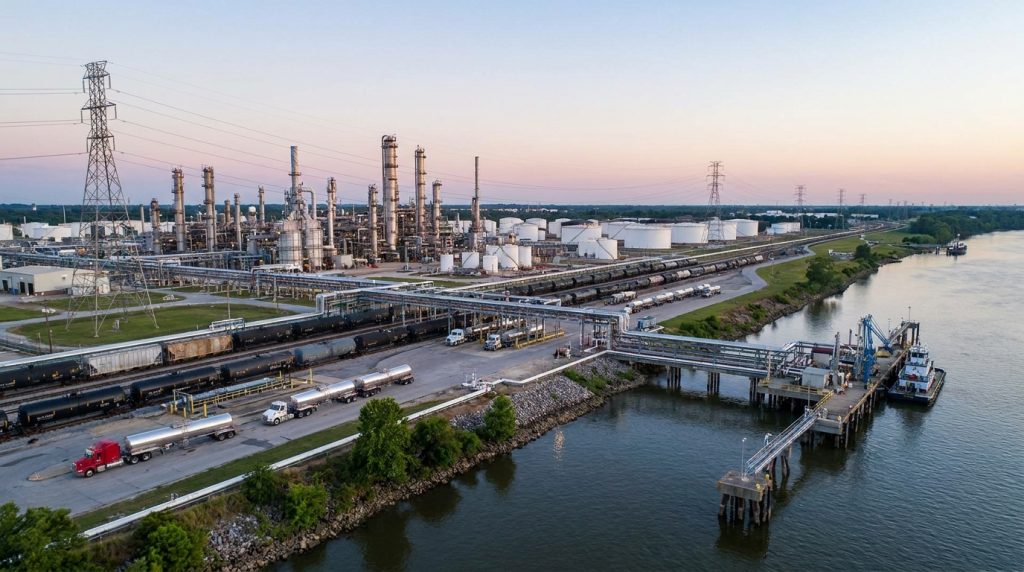
The global storage and logistics infrastructure for petroleum products is a vast and interconnected system that ensures the steady flow of fuels such as gasoline, diesel, jet fuel, and LPG from refineries to end users. This infrastructure is essential for balancing supply and demand, maintaining energy security, and supporting global economic activity. It includes storage terminals, pipelines, shipping networks, and distribution systems that operate across continents.
One of the most important components of this system is storage infrastructure. Petroleum products are stored in large tank farms located near refineries, ports, and major consumption centers. These storage facilities act as buffers, allowing markets to manage fluctuations in production and demand. Strategic reserves maintained by governments also play a key role in ensuring supply during emergencies or disruptions.
Transportation logistics are equally critical. Pipelines form the backbone of domestic fuel distribution in many countries, providing a continuous and cost-effective way to move large volumes over long distances. In regions without extensive pipeline networks, rail and tanker trucks are used to transport fuels to inland markets and remote areas.
Maritime shipping is central to international petroleum logistics. Tanker vessels carry crude oil and refined products between exporting and importing countries. Key global routes pass through strategic chokepoints such as the Strait of Hormuz, the Suez Canal, and the Strait of Malacca. These routes are vital for maintaining global supply chains, and any disruption can quickly impact fuel availability and prices worldwide.
Port infrastructure also plays a significant role in the logistics network. Modern ports are equipped with advanced loading and unloading systems, storage tanks, and pipeline connections that enable efficient handling of petroleum products. High-capacity terminals reduce turnaround time for vessels and improve overall supply chain efficiency.
Energy trading and logistics companies help manage this complex infrastructure. Firms such as Vitol and Trafigura operate storage facilities, charter vessels, and coordinate global shipments. Their ability to optimize logistics and manage inventory across multiple regions helps balance supply and demand in dynamic market conditions.
Another important aspect is regional distribution networks. Once petroleum products arrive at a destination country, they are distributed through a network of pipelines, depots, and retail outlets. Fuel stations, airports, and industrial consumers rely on these systems for consistent supply. Efficient last-mile distribution is critical to avoid shortages and ensure timely delivery.
Technology is increasingly shaping global petroleum logistics. Digital monitoring systems, automated inventory management, and real-time tracking tools are improving visibility and efficiency across the supply chain. These technologies help reduce losses, prevent delays, and enhance decision-making.
Geopolitical and environmental factors also influence storage and logistics infrastructure. Sanctions, trade restrictions, and regional conflicts can disrupt established routes and require rerouting of shipments. At the same time, stricter environmental regulations are driving improvements in storage safety, emissions control, and fuel handling practices.
In conclusion, the global storage and logistics infrastructure for petroleum products is a complex system that supports the continuous movement of energy across the world. From storage terminals and pipelines to shipping routes and distribution networks, every component plays a vital role in ensuring reliable fuel supply. As global energy demand evolves, this infrastructure will continue to adapt through innovation, investment, and strategic planning.