

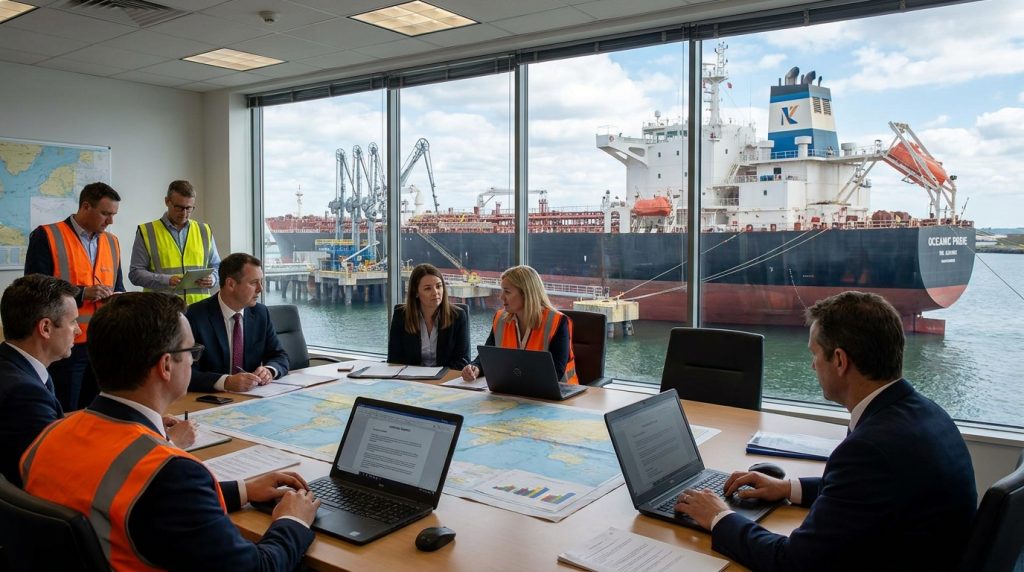
Tanker chartering is a fundamental part of global oil and gas transportation, enabling the movement of crude oil and refined products across international markets. It involves the hiring of specialized vessels to transport energy cargo from exporting regions to consuming countries. Because petroleum trade depends heavily on maritime logistics, chartering plays a critical role in determining costs, delivery timelines, and overall supply chain efficiency.
At its core, tanker chartering is an agreement between a ship owner and a charterer, which could be an oil company, refinery, or trading firm. The terms of this agreement define how the vessel will be used, how much will be paid, and who is responsible for various operational aspects. These agreements are flexible and tailored to the needs of the cargo, route, and market conditions.
There are several main types of chartering arrangements. A voyage charter is one of the most common forms, where a vessel is hired for a single trip between two specified ports. The ship owner is responsible for operating the vessel, while the charterer pays freight based on the cargo volume or a negotiated rate. This type of charter is widely used for spot market transactions.
A time charter offers more flexibility. In this arrangement, the charterer hires the vessel for a specific period, such as several months or years. The charterer gains control over the vessel’s schedule and routes, while the ship owner remains responsible for technical operations like maintenance and crew. Time charters are often used by companies that require consistent shipping capacity.
Another form is the bareboat charter, where the charterer takes full control of the vessel, including crew and operations, for an extended period. This arrangement is less common in oil trading but may be used by large companies seeking long-term control over shipping assets.
Tanker types are also important in chartering decisions. Large vessels such as Very Large Crude Carriers (VLCCs) are used for long-haul routes between major oil-producing regions and large markets. Smaller vessels, such as product tankers, are used for transporting refined fuels to regional destinations. The choice of vessel depends on cargo type, route limitations, and port capacity.
Freight rates are a key factor in tanker chartering. These rates fluctuate based on supply and demand for vessels, fuel prices, seasonal trends, and global economic conditions. When demand for shipping is high or vessel availability is limited, freight rates increase, raising the overall cost of transporting oil. Conversely, lower demand leads to reduced shipping costs.
Global trade routes and chokepoints also influence chartering strategies. Routes passing through areas like the Strait of Hormuz and the Suez Canal are critical for efficient transportation. Delays or disruptions in these areas can affect voyage duration, costs, and vessel availability.
Energy trading companies such as Vitol and Trafigura are heavily involved in tanker chartering. They use their global networks to secure vessels, optimize routes, and manage shipping risks. Their expertise allows them to respond quickly to market changes and maintain efficient supply chains.
Risk management is an essential part of tanker chartering. Contracts often include clauses that address delays, cargo handling, demurrage charges, and unforeseen events. Insurance coverage is also critical to protect against potential losses during transit.
In conclusion, tanker chartering is a vital mechanism in global oil and gas transportation. It provides the flexibility and capacity needed to move energy resources efficiently across the world. By understanding chartering structures, vessel types, and market dynamics, companies can better manage costs, reduce risks, and ensure reliable delivery in the global energy trade.