

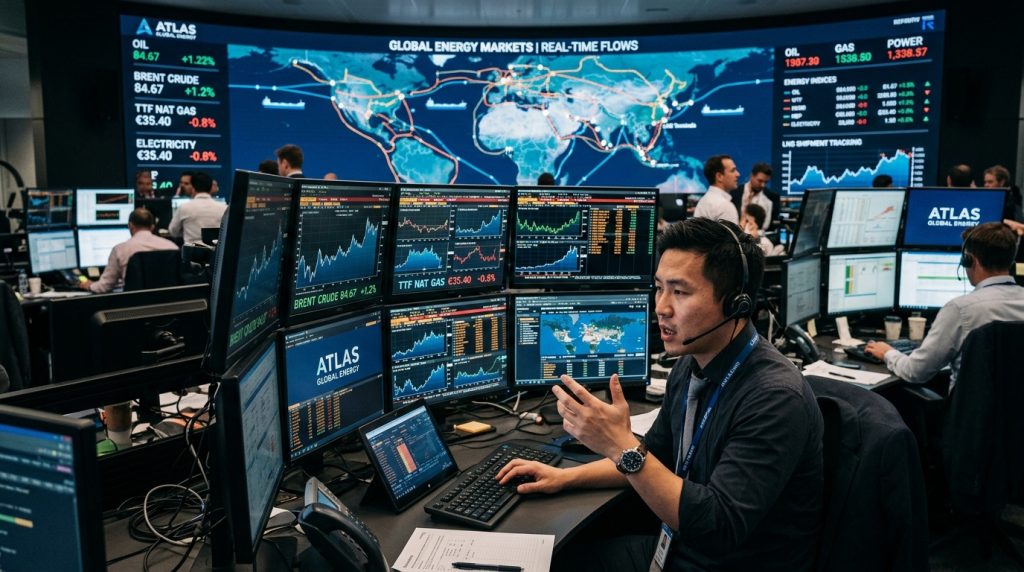
Energy trading companies play a central role in connecting global supply and demand within the international petroleum and energy industry. These companies facilitate the movement of crude oil, refined petroleum products, natural gas, and other energy commodities across international markets. By coordinating transactions between producers, refineries, suppliers, logistics providers, and end-users, energy trading companies help maintain the stability and efficiency of global energy supply chains.
In modern global markets, energy demand varies significantly between regions. Some countries produce large quantities of oil and gas, while others depend heavily on imports to support transportation, industrial operations, manufacturing, and power generation. Energy trading companies help bridge this gap by sourcing products from supply-rich regions and delivering them to markets with growing energy demand.
One of the primary functions of energy trading companies is supply chain coordination. Petroleum and energy products move through highly complex systems involving refineries, storage terminals, pipelines, tanker vessels, shipping ports, and inland transportation networks. Trading companies manage these logistical processes to ensure products reach buyers efficiently and on schedule.
Energy traders also play a major role in market liquidity and commercial flexibility. Global energy prices are constantly influenced by geopolitical developments, production changes, shipping costs, currency fluctuations, and economic conditions. Trading companies help markets operate more efficiently by facilitating transactions, balancing supply availability, and responding quickly to changing market conditions.
Another important responsibility of energy trading companies is identifying commercial opportunities within international markets. Businesses involved in energy trading continuously analyze pricing trends, regional demand patterns, refinery output, and transportation costs to determine where profitable opportunities may exist. Market intelligence and operational expertise allow trading companies to make strategic decisions within highly competitive environments.
Risk management is also a critical component of global energy trading. International petroleum markets are exposed to various risks, including supply disruptions, political instability, freight volatility, and regulatory changes. Energy trading companies develop strategies to minimize operational and financial exposure while maintaining stable commercial operations.
Relationship management plays an equally important role in the energy trading sector. Successful trading companies build long-term partnerships with suppliers, buyers, logistics providers, inspection agencies, and financial institutions. Strong industry relationships improve operational coordination, increase supply reliability, and create greater commercial stability over time.
Compliance and documentation are essential within international energy transactions. Energy trading companies must navigate import regulations, export requirements, sanctions policies, customs procedures, environmental standards, and financial compliance frameworks across multiple jurisdictions. Maintaining regulatory compliance is critical for ensuring smooth cross-border operations.
Technology has significantly transformed modern energy trading activities. Companies now rely on digital trading platforms, real-time market analytics, freight monitoring systems, and supply chain intelligence tools to improve operational efficiency and decision-making. Access to advanced data systems allows traders to respond more effectively to market changes and optimize commercial performance.
In addition to facilitating transactions, many energy trading companies provide consultancy and strategic support to businesses entering international energy markets. These services may include supplier sourcing, market analysis, logistics coordination, refinery allocation support, and operational planning.
As global energy demand continues evolving, the role of energy trading companies remains essential in supporting international commerce and maintaining energy accessibility across different regions. Businesses operating within this sector contribute to the movement of critical energy resources that support industries, economies, and infrastructure worldwide.
Organizations such as Petronyx Global support professional engagement within international energy markets by facilitating strategic coordination, consultancy services, and global petroleum trading operations.