

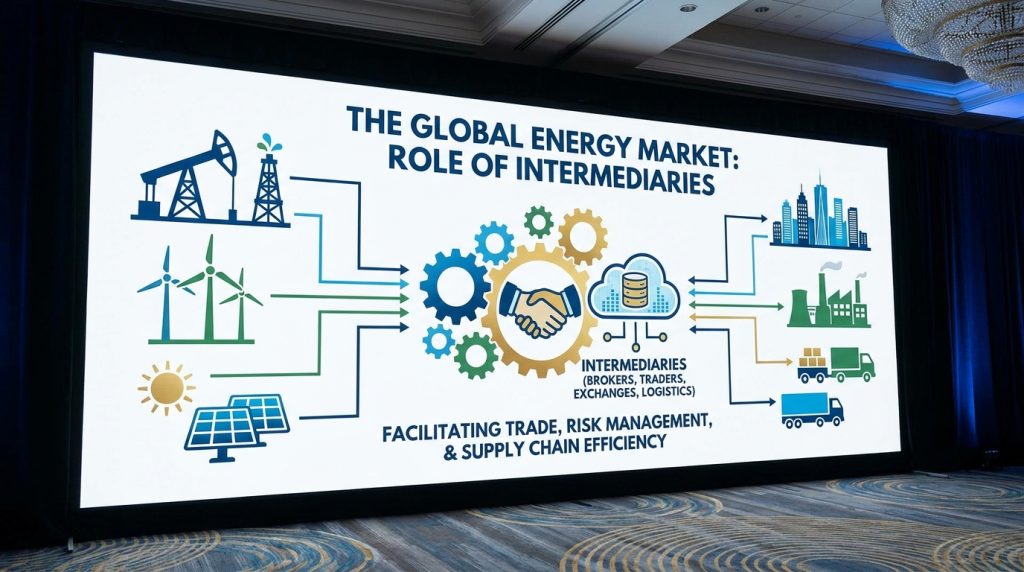
Intermediaries play a crucial role in global energy markets by connecting producers, refiners, distributors, and end users. Because energy commodities such as crude oil, natural gas, and refined petroleum products are traded across multiple countries and time zones, intermediaries help ensure that transactions are efficient, secure, and well-coordinated. Without them, the global energy system would be far less flexible and significantly more fragmented.
One of the most important groups of intermediaries is commodity trading companies. Firms such as Vitol, Trafigura, and Glencore operate at the center of global energy flows. These companies buy energy resources from producers in one region and sell them to buyers in another, often optimizing supply chains based on price differences, demand conditions, and logistics efficiency. They also take on significant risk by holding inventory and managing price volatility.
Intermediaries also play a key role in risk management. Energy prices are highly volatile due to geopolitical events, supply disruptions, and changing demand patterns. Trading companies and financial intermediaries use hedging instruments such as futures and options to protect themselves and their clients from unexpected price movements. This helps stabilize the market and allows producers and consumers to plan more effectively.
Financial institutions are another important category of intermediaries. Banks provide essential services such as letters of credit, trade financing, and payment guarantees. In international energy trade, especially in oil shipments, a letter of credit ensures that sellers will be paid once contractual conditions are met. This reduces credit risk and enables large-scale transactions between parties that may not have direct trust or prior relationships.
Shipping brokers and logistics companies also act as intermediaries in global energy markets. They arrange transportation for crude oil and refined products, coordinating tanker vessels, pipeline usage, and port operations. Their expertise ensures that energy commodities are delivered efficiently across long and complex supply routes. Without these services, delays and inefficiencies in transportation would significantly disrupt global supply chains.
Another important intermediary function is market information and price discovery. Energy markets rely heavily on accurate and timely information about supply, demand, inventories, and geopolitical risks. Data providers and analytics firms help market participants make informed decisions. This transparency supports fair pricing and improves overall market efficiency.
Intermediaries also help smaller producers and consumers access global markets. Many oil-producing countries or companies do not have direct access to international buyers. Trading firms bridge this gap by aggregating supply and distributing it to multiple destinations. Similarly, smaller buyers rely on intermediaries to secure reliable energy supplies at competitive prices.
In recent years, digital platforms and algorithmic trading systems have begun to transform the role of intermediaries. Automation and data analytics are improving speed and efficiency in trade execution, while also increasing competition among traditional trading firms. However, human expertise remains essential in navigating geopolitical risks and complex logistical challenges.
In conclusion, intermediaries are a fundamental part of global energy markets. They facilitate trade, manage risk, provide financing, ensure logistics, and improve market transparency. By connecting different parts of the energy supply chain, they help maintain stability and efficiency in one of the world’s most important and complex industries.