

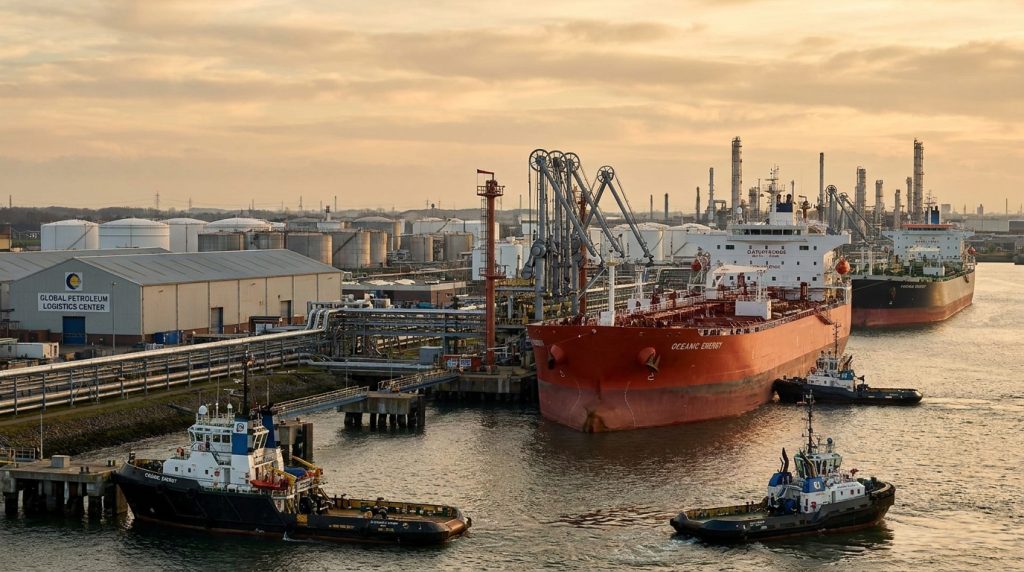
Shipping and maritime logistics are central to petroleum trading, enabling crude oil and refined products to move efficiently across global markets. Since major oil-producing regions are often far from key consumption centers, ocean transport provides the most practical and cost-effective solution for large-scale energy movement. The success of global petroleum trade depends heavily on the efficiency, reliability, and security of maritime logistics systems.
At the core of this system are tanker vessels designed specifically for transporting oil and petroleum products. These include Very Large Crude Carriers (VLCCs), Suezmax tankers, and smaller product carriers used for refined fuels such as gasoline and diesel. Each type of vessel is suited to specific routes, cargo sizes, and port capacities, allowing flexibility in global shipping operations.
Maritime routes are structured around key global corridors and chokepoints. The Strait of Hormuz is one of the most critical passages, handling a significant share of global oil exports from the Middle East. The Suez Canal provides a direct link between Asia and Europe, reducing travel time and shipping costs. Similarly, the Strait of Malacca is a major route connecting the Indian Ocean with the Pacific, serving energy-hungry economies in East Asia. These chokepoints are essential for maintaining global supply flows, and any disruption can quickly impact prices and availability.
A key component of maritime logistics is chartering. Oil companies and traders charter vessels through contracts that define the terms of shipment. These agreements can be time charters, where a vessel is hired for a specific period, or voyage charters, where it is hired for a single journey. Freight rates fluctuate based on demand for vessels, fuel costs, seasonal trends, and global economic conditions, directly influencing the overall cost of petroleum trade.
Port infrastructure is another critical factor. Modern ports are equipped with specialized terminals, storage tanks, and pipeline connections that allow for efficient loading and unloading of petroleum cargo. High-capacity terminals reduce waiting times and improve turnaround efficiency, which is crucial in a market where delays can lead to significant financial losses.
Energy trading firms such as Vitol and Trafigura play a major role in maritime logistics. These companies coordinate shipping operations, manage vessel charters, and optimize trade routes to ensure timely delivery of cargo. Their global networks and logistical expertise allow them to respond quickly to market changes and supply disruptions.
Risk management is also a key aspect of maritime petroleum logistics. Shipping operations face risks such as weather disruptions, piracy, geopolitical tensions, and regulatory changes. Insurance coverage, route diversification, and real-time monitoring systems are used to minimize these risks and ensure safe transportation.
Technological advancements are improving efficiency in maritime logistics. Digital tracking systems, automated scheduling, and data analytics help optimize routes, reduce fuel consumption, and enhance transparency across the supply chain. These innovations are becoming increasingly important as global trade volumes grow.
Environmental considerations are also shaping the future of shipping in petroleum trading. Stricter regulations on emissions and fuel quality are pushing the industry toward cleaner shipping practices. This includes the use of low-sulfur fuels, improved vessel efficiency, and exploration of alternative energy sources for maritime transport.
In conclusion, shipping and maritime logistics are vital to the functioning of global petroleum trading. They connect producers and consumers across continents, enabling the smooth flow of energy resources. As the industry evolves, continued investment in infrastructure, technology, and sustainability will be essential to maintaining efficient and secure global energy supply chains.