

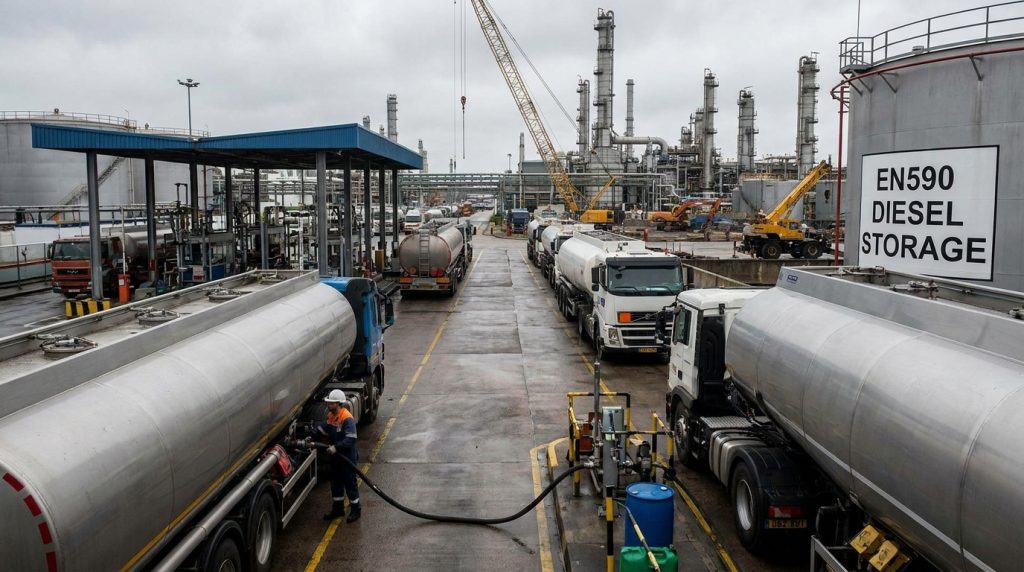
Diesel EN590 is one of the most widely used refined petroleum products in the world, forming the backbone of global transportation, logistics, and industrial operations. Its demand is closely linked to economic activity, freight movement, construction, and manufacturing output. Because it is standardized under strict quality specifications, EN590 ensures compatibility with modern diesel engines and compliance with environmental regulations across many regions.
In the transportation sector, EN590 diesel is essential for road freight, buses, and commercial vehicles. Heavy-duty trucks that move goods across countries and continents rely heavily on diesel engines due to their efficiency, durability, and high torque output. Global supply chains depend on continuous diesel availability to keep logistics networks functioning smoothly. Any disruption in diesel supply can quickly affect food distribution, retail operations, and international trade flows.
Public transportation systems also contribute significantly to diesel demand. In many countries, buses remain the primary mode of mass transit, especially in urban and semi-urban areas. Diesel-powered trains are still widely used in regions where railway electrification is limited. Additionally, shipping and marine transport use marine diesel fuels closely related to EN590 standards in certain applications.
In the industrial sector, diesel plays a critical role in powering machinery, generators, and heavy equipment. Construction projects depend on diesel-fueled excavators, cranes, bulldozers, and other machinery to complete infrastructure development. Mining operations also rely heavily on diesel for transporting materials and operating large-scale equipment in remote areas where grid electricity is unavailable.
Agriculture is another major consumer of diesel EN590. Tractors, harvesters, irrigation pumps, and other farming equipment rely on diesel engines to ensure productivity in rural economies. Seasonal agricultural cycles often lead to predictable spikes in diesel demand, especially during planting and harvesting periods.
Electricity generation is another important use case. In regions with unstable power grids or limited infrastructure, diesel generators provide backup and emergency electricity supply. Hospitals, data centers, industrial plants, and commercial facilities often depend on diesel generators to maintain uninterrupted operations during power outages.
Global demand for EN590 diesel is strongly influenced by economic growth and industrial activity. Emerging economies in Asia, Africa, and Latin America are major drivers of consumption due to expanding transportation networks, urbanization, and industrial development. At the same time, developed regions continue to rely on diesel for freight transport and industrial applications, even as they gradually adopt cleaner energy technologies.
Pricing and availability of EN590 diesel are closely linked to global crude oil benchmarks such as Brent crude oil. Refining capacity, transportation costs, and seasonal demand fluctuations also play significant roles in determining market prices. When crude oil prices rise, diesel prices typically follow due to higher production costs.
International trade and logistics companies such as Vitol and Trafigura help manage global diesel flows. They ensure supply is distributed efficiently between surplus and deficit regions by coordinating shipments, storage, and trading activities. Their role is especially important during periods of supply imbalance or geopolitical disruption.
In conclusion, diesel EN590 remains a critical fuel for both transportation and industrial sectors worldwide. Its widespread use in logistics, construction, agriculture, and power generation ensures consistent global demand. While long-term energy transitions may gradually reshape consumption patterns, diesel will continue to play a central role in supporting global economic activity for the foreseeable future.